Oilfield Chemical Solutions

Field-ready chemistry for complex well conditions

PECOME translates laboratory validation into practical fluid systems for wellbore stability, reservoir protection, HSE performance, and field efficiency.

Solution Library

One image, one problem, one technical route

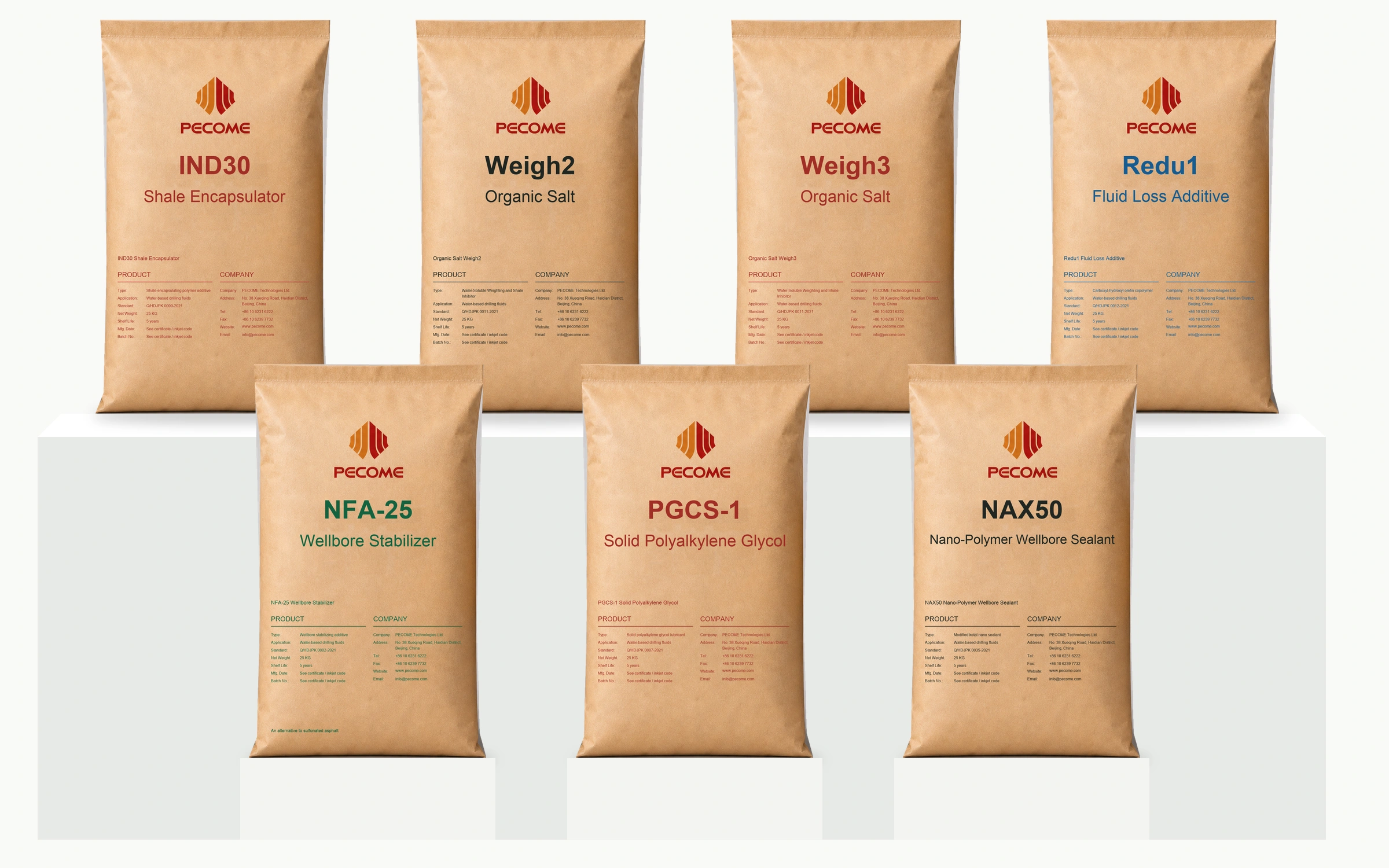
Weigh organic-salt technology originated from challenging drilling conditions in the Southern Junggar Margin. Built around stronger inhibition and lower solids content, it has evolved into a portfolio for drilling fluids, drill-in fluids, completion fluids, and weighted stimulation fluids. NATU natural-polymer systems focus on environmental compliance, reservoir protection, and wellbore stability; NFA-25 provides a nonfluorescent, non-asphaltic route to reduce sulfonated and black-asphalt dependency in water-based drilling.

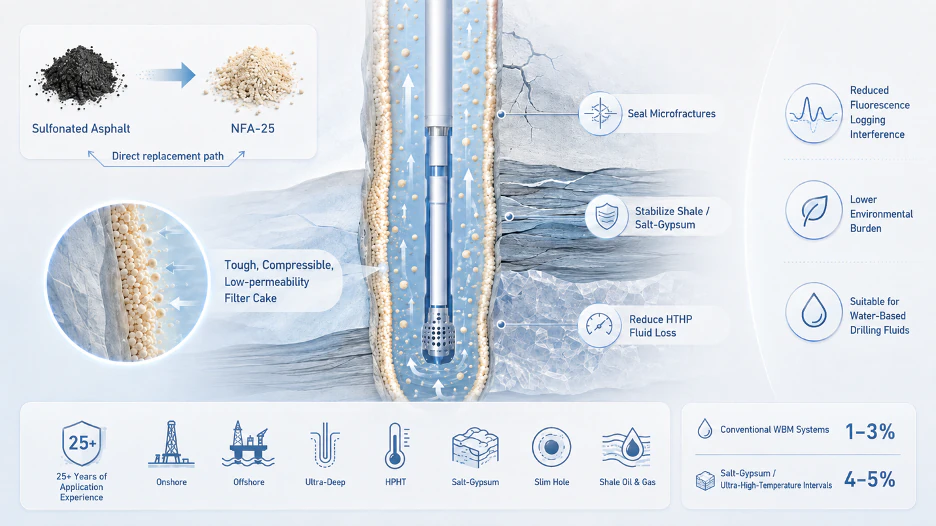
NFA-25 wellbore-stability mechanism as an alternative to sulfonated asphalt
NFA-25® | Alternative to Sulfonated Asphalt

NFA-25® alternative to sulfonated asphalt

NFA-25® is a nonfluorescent, non-asphaltic wellbore stabilizer that provides a direct alternative to sulfonated asphalt in water-based drilling fluids. It forms a tough, compressible, low-permeability filter cake to seal microfractures, stabilize shale and salt-gypsum formations, reduce HTHP fluid loss, avoid fluorescence interference during mud logging, and reduce dependence on conventional black asphalt materials.

Public technical papers and field-application records show more than 25 years of experience across onshore, offshore, ultra-deep, HTHP, salt-gypsum, slim-hole, shale-oil, and shale-gas operations. Typical evaluation dosage is 1-3% in water-based systems, with 4-5% considered for salt-gypsum or ultra-high-temperature intervals.
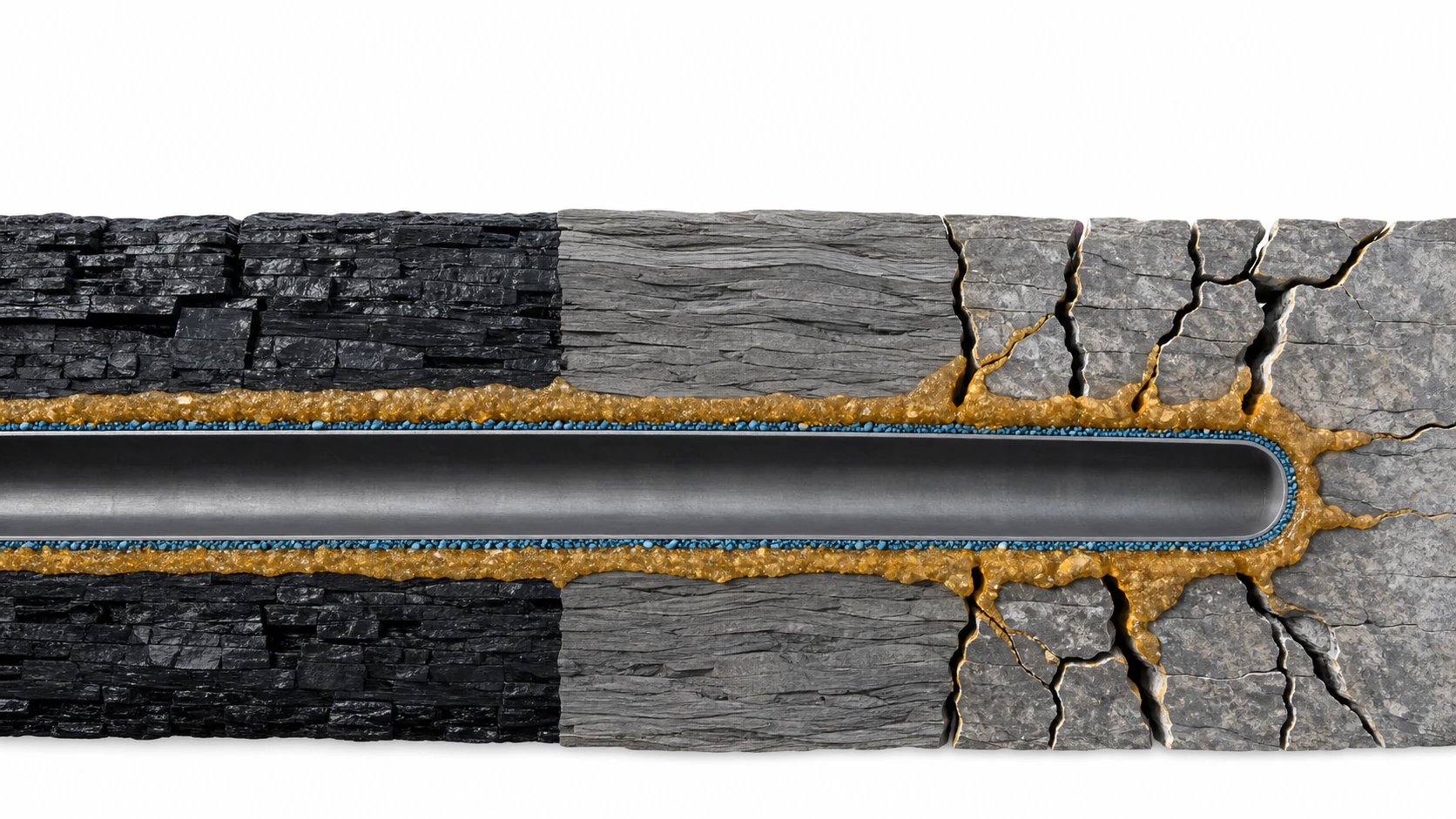
NAX50 nano sealing and lost-circulation control dual-layer sealing mechanism
NAX50 Nano Sealing

NAX50 nano sealing and lost-circulation control technology

NAX50 targets plugging and lost-circulation control in water-based drilling fluids for shale oil, shale gas, coalbed methane, coal-rock gas, and naturally fractured formations. A nanoscale surfactant polymer forms an inner adsorption film on shale, coal, mudstone, and microfracture surfaces; together with a nonfluorescent, non-asphaltic wellbore stabilizer and graded bridging materials, it builds an outer compressible filter cake to deliver dual-layer sealing.

IPTC paper materials report field validation in Ordos Basin CBM horizontal wells, including a 165 mm slim-hole horizontal well, long laterals, and mudstone-rich coal-measure intervals. Field performance included stable wellbores, clean trips and casing runs, no collapse, and block records including an 18.38-day drilling cycle and 12.71 m/h ROP.

NATU natural-polymer environmental drilling fluid product system
NATU Natural Polymer

NATU® natural-polymer environmental drilling fluid

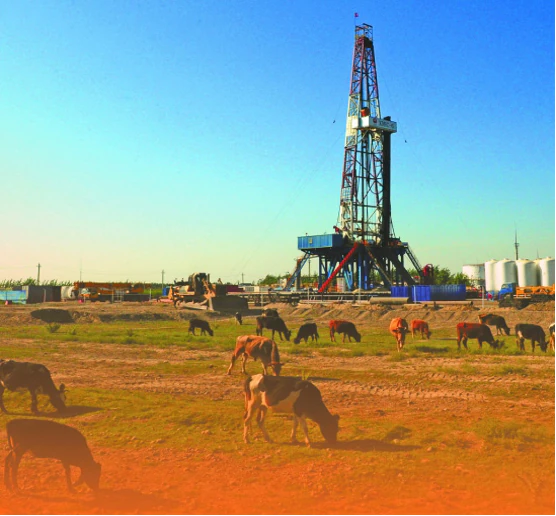
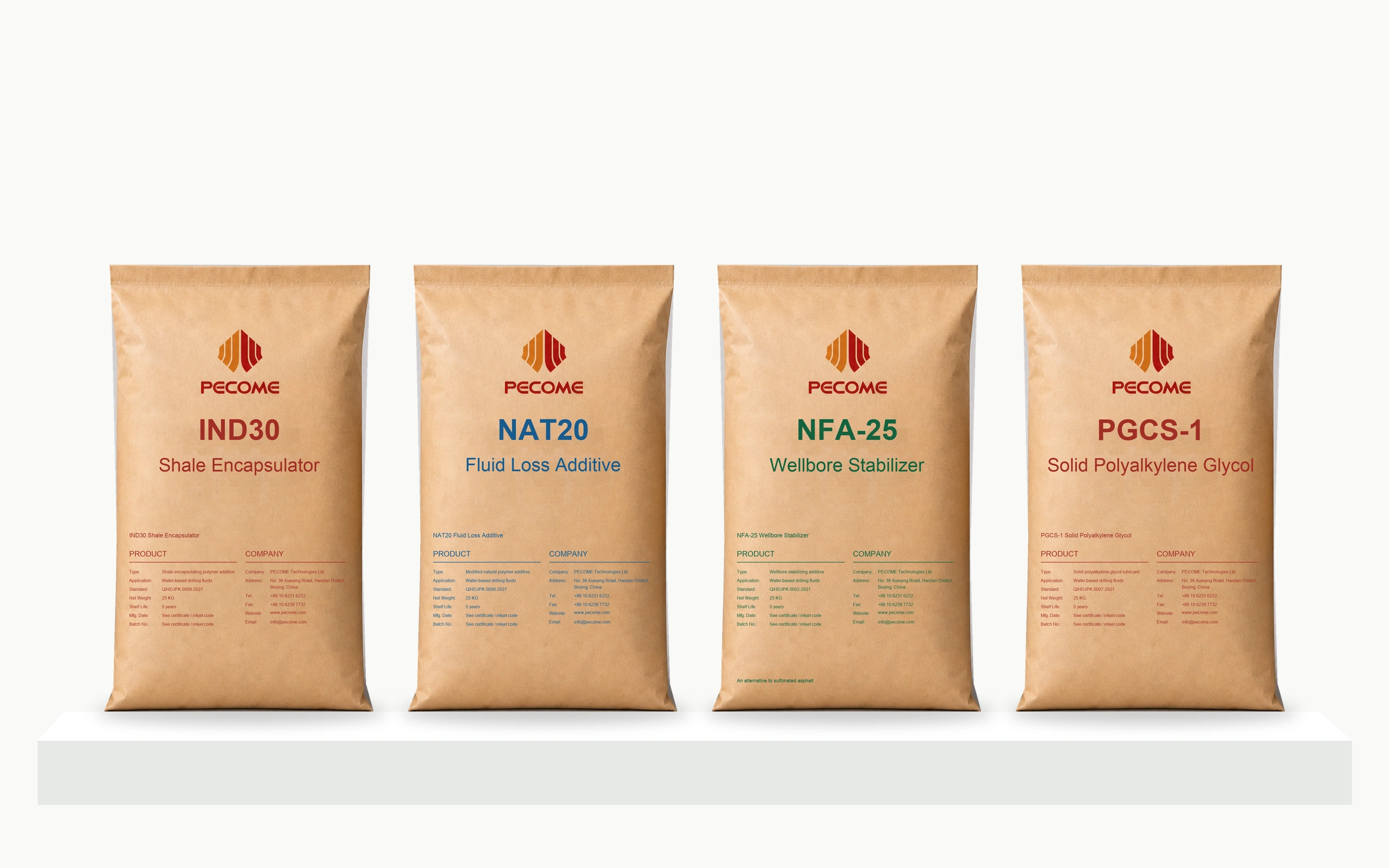
NATU technology uses modified natural plant-gum derivatives to build a water-based drilling fluid system centered on IND30 natural-polymer encapsulator, NAT20 natural-polymer filtrate reducer, NFA-25, and PGCS-1 solid polyglycol. It is designed for environmentally sensitive areas, offshore operations, low-permeability reservoirs, and water-sensitive shale intervals where inhibition, hole cleaning, lubrication, fluid-loss control, reservoir protection, and reduced dependence on sulfonated and oil-based additives must work together.

Field application materials show more than 1,800 well applications across Tarim, Xinjiang, Sulige, Daniudi, Shengli Chengdao, and Weizhou fields in the Beibu Gulf, covering vertical, directional, horizontal, fishbone multilateral, shallow-water offshore, and 6,000 m-class deep wells.

Organic-salt oil-based mud alternative core additive package system
Oil-Based Mud Alternative

Organic-salt technology as an alternative to oil-based mud

Weigh organic salts reduce water activity and limit shale hydration, delivering oil-based-mud-like inhibition with the handling, HSE, reservoir-protection, and sustainability advantages of a water-based system.

Field experience: Kuqa foreland wells, Weizhou offshore fields, Qinghai shale oil, and Zhaotong shale gas applications.

Organic salt HTHP drilling fluid technology
HTHP Drilling Fluids

Organic-salt HTHP drilling fluid technology

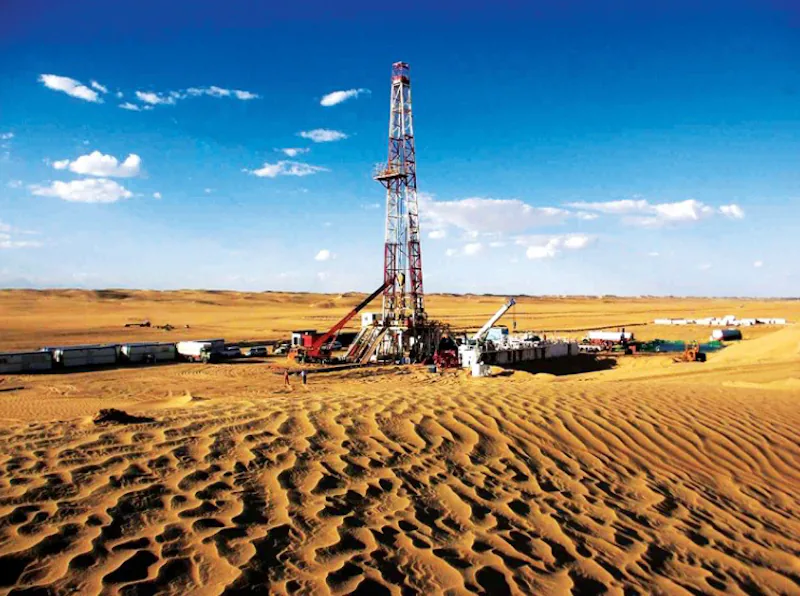
For high-temperature, high-pressure, high-density, and narrow-margin wells, Weigh systems support rheology control, fluid-loss control, inhibition, and wellbore stability in deep and ultra-deep operations.

Field experience includes 180-240°C conditions, high-density fluids, and deep wells in Qinghai, Tarim, Huabei, Yumen, Daqing, and overseas projects.

Weigh organic-salt shale oil drilling fluid formation schematic
Shale Oil

Weigh® organic-salt shale oil drilling fluid

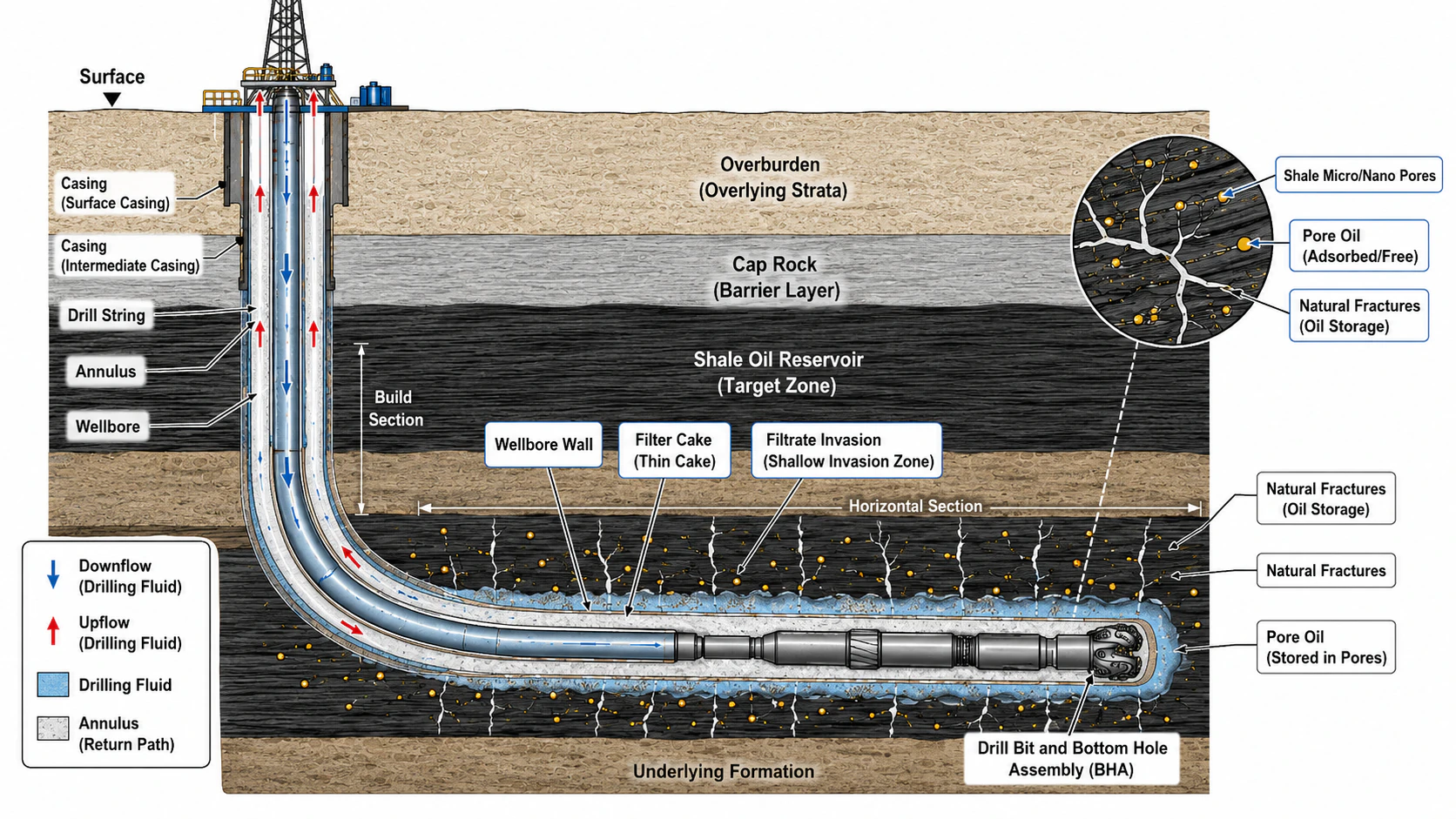
Designed for long horizontal sections, multi-well pads, faults, and unstable shale intervals, Weigh systems combine inhibition, low solids, lubrication, and plugging to support casing run and drilling efficiency.

Successfully applied in Changqing Qingcheng shale oil, Qinghai Yingxiongling shale oil, and Daqing Gulong shale oil projects.

Weigh organic-salt shale gas drilling fluid formation schematic
Shale Gas

Weigh® organic-salt shale gas drilling fluid

For shale gas horizontal wells with collapse-prone intervals, strong water sensitivity, and reservoir-protection requirements, Weigh technology suppresses hydration, reduces solids-related damage, and improves hole quality, providing a water-based technical route to replace oil-based systems.

Successfully applied in Zhaotong shale gas, with continuous operating experience in shallow shale-gas plays and shale-gas demonstration areas.

Organic salt drilling fluid for salt and gypsum formations
Salt-Gypsum Formations

Organic-salt drilling fluid for salt and gypsum formations

In salt, gypsum, and gypsum-mudstone formations, Weigh systems help resist contamination, maintain gauge hole quality, and reduce risks of tight hole, sticking, logging trouble, and casing-running difficulty.

Field records include thick salt-gypsum intervals in Tarim, Huabei, and overseas wells. Well names are anonymized as xxx where required.

Organic salt drill-in fluid technology
Drill-In Fluids

Organic-salt drill-in fluid technology

Organic-salt drill-in fluids focus on low-solids or solids-free design, compatibility, low water blocking, and reservoir protection for sandstone, carbonate, shale oil and gas, and tight reservoirs.

Best fit: reservoir drilling, drill-in/completion integration, and later testing or stimulation programs.

Weigh organic-salt completion-fluid density window
Completion Fluids

Organic-salt completion fluid technology

Weigh completion fluids can be used as perforating fluids, kill fluids, workover fluids, and annulus protection fluids. They balance density, reservoir protection, and operational safety for high-pressure wells, gas reservoirs overlain by salt-gypsum intervals, and long-term shut-in conditions.

Field experience covers Tarim, Sichuan, and multiple high-pressure gas-field completion operations with solids-free organic-salt completion fluids.

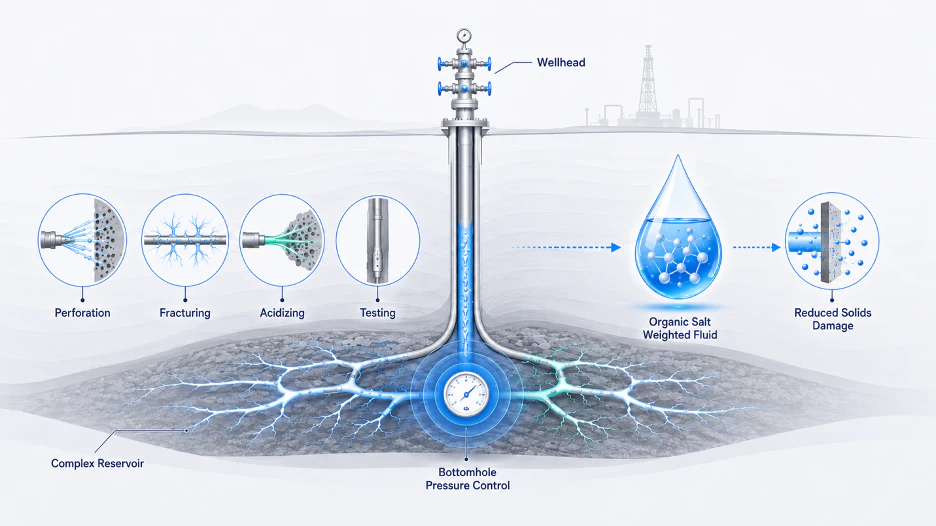
Organic-salt weighted stimulation fluid bottomhole-pressure control and reduced solids-damage mechanism
Weighted Stimulation Fluids

Organic-salt weighted stimulation fluid technology

For high-pressure perforating, fracturing, acidizing, and testing operations, weighted organic-salt fluids provide pressure control while reducing solids-related formation damage.

A key Sichuan Basin well used weighted organic-salt fluid through perforating, fracturing, acidizing, and testing with bottomhole operating pressure at the 207 MPa level; the well name is anonymized as xxx.

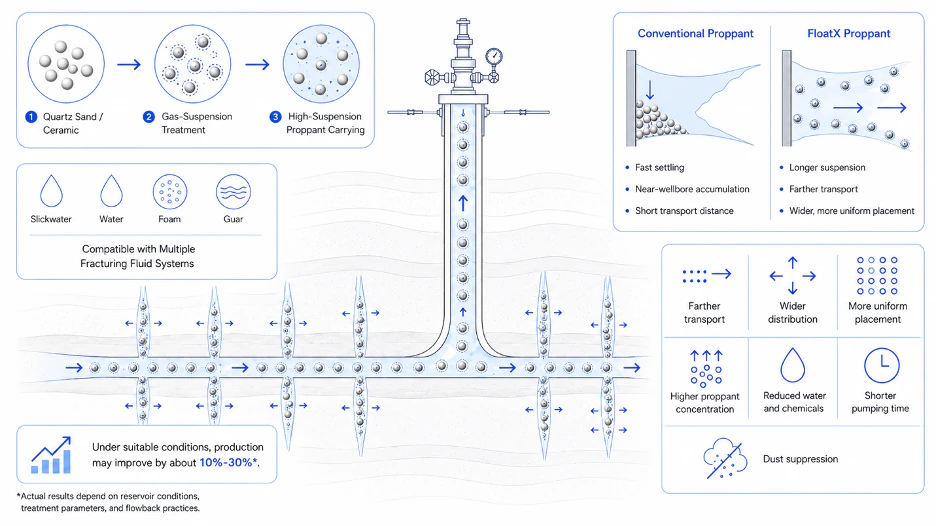
FloatX gas-suspended proppant mechanism and proppant-transport diagram
FloatX Gas-Suspended Proppant

FloatX® gas-suspended proppant fracturing technology

FloatX technology treats the surface of quartz sand, ceramic proppant, and other proppants to improve suspension and transport in slickwater, fresh water, foam, and guar-based fracturing fluids. It targets rapid settling, limited proppant placement, and poor far-field transport in conventional slickwater systems, helping proppant travel farther and distribute more effectively within the fracture network.

Field comparison materials indicate that, under suitable reservoir and operating conditions, the technology can improve effective proppant placement and fracture-stimulation efficiency, with production showing an approximate 10%-30% uplift range versus comparable wells. Actual results depend on reservoir quality, treatment design, flowback practice, and operating conditions. The technology also supports higher sand concentration, reduced water and chemical consumption, shorter pumping time, and dust suppression.